
Related Posts


Choosing a dental marketing agency is easier when you know what you need it to accomplish. More new-patient exams, more implant and clear aligner consultations, filling a new associate's schedule or growing a newly acquired practice all call for different priorities, and potentially different partners.
The challenge is that most dental marketing companies advertise a similar mix of dental SEO, Google Ads, websites and social media. Those service lists tell you relatively little about the investment required, the team's dental experience or what happens to your website if you leave.
This guide compares ten dental digital marketing agencies, including Wonderist Agency, NearLead, Progressive Dental Marketing, Firegang and Scorpion. We examine their offerings, published pricing, available client evidence and the questions worth asking before signing.
Compare the Best Dental Marketing Agencies
These agencies serve different budgets, practice types and growth goals. Compare the scope behind each price before treating two proposals as equivalent.
| Agency | Worth considering for | Pricing | Important consideration |
|---|---|---|---|
| 1. Wonderist Agency | Dental-only branding, websites, SEO, ads and social under one team | Custom quote; no public rate card | Ask for a case study matching your practice type |
| 2. NearLead | Practices wanting full-service digital marketing at one flat fee | $3,500/month; free website; $0 initiation fee | 12-month initial commitment, then month-to-month; ad spend separate |
| 3. Progressive Dental Marketing | Implant and full-arch case growth, paired with sales training | Custom quote | Confirm how marketing and training are priced and committed |
| 4. Golden Proportions Marketing | Call tracking and front-desk conversion alongside marketing | Custom quote; directory listing shows a $2,500+ minimum project | Clarify software subscriptions and setup charges |
| 5. Firegang Dental Marketing | New-patient growth built on practice differentiation | Custom quote | Ask how much of the monthly spend goes to media |
| 6. Scorpion | Marketing and practice-growth technology on one platform | Custom quote | Typically 12 months for technology and SEO; ads usually monthly |
| 7. Pain-Free Dental Marketing | Month-to-month terms and one client per area | Directory listing shows a $2,000+/month minimum retainer | Define the boundaries of exclusivity |
| 8. ProSites | A lower-cost website and marketing starting point | Packages from $600/month; custom websites from $900/month | Confirm setup fees and what each package includes |
| 9. :Delmain | Measured new-patient acquisition for practices and groups | Custom quote | Request dated case studies with spend context |
| 10. Thrive Internet Marketing Agency | A broad mix of services from a generalist agency | Custom quote | Its published dental-sector example is orthodontic |
All prices are in USD. NearLead's monthly fee excludes advertising spend. Confirm media budgets, software costs and additional charges with each provider.
How We Selected These Dental Marketing Companies
We reviewed public service pages, pricing information, FAQs, directory listings and available client examples. The shortlist covers different operating models, from a lower-cost website package to dental-only agencies offering branding, sales training and practice technology.
Our assessment considered:
Dental experience: Evidence of serving general, cosmetic, implant or specialty practices.
Service scope: What a practice would actually receive each month.
Client evidence: Named practices, meaningful measurements and reporting periods.
Transparency: Available information about costs, commitments and website ownership.
Patient privacy: How calls, forms and tracking tools are handled around patient information.
Practice fit: The situations in which an offering deserves a closer look.
The descriptions below are assessments of fit, not claims that one provider consistently outperforms another. NearLead is included as the publisher-affiliated option described in the disclosure.
1. Wonderist Agency
Worth considering for: Practices that want branding, websites, SEO, paid ads and social media handled by one dental-only team.
Wonderist is a San Diego agency that works only with dental practices. It covers account management, SEO, paid advertising, social media, web development, photo and video, and brand development, with a dedicated account manager providing monthly updates.
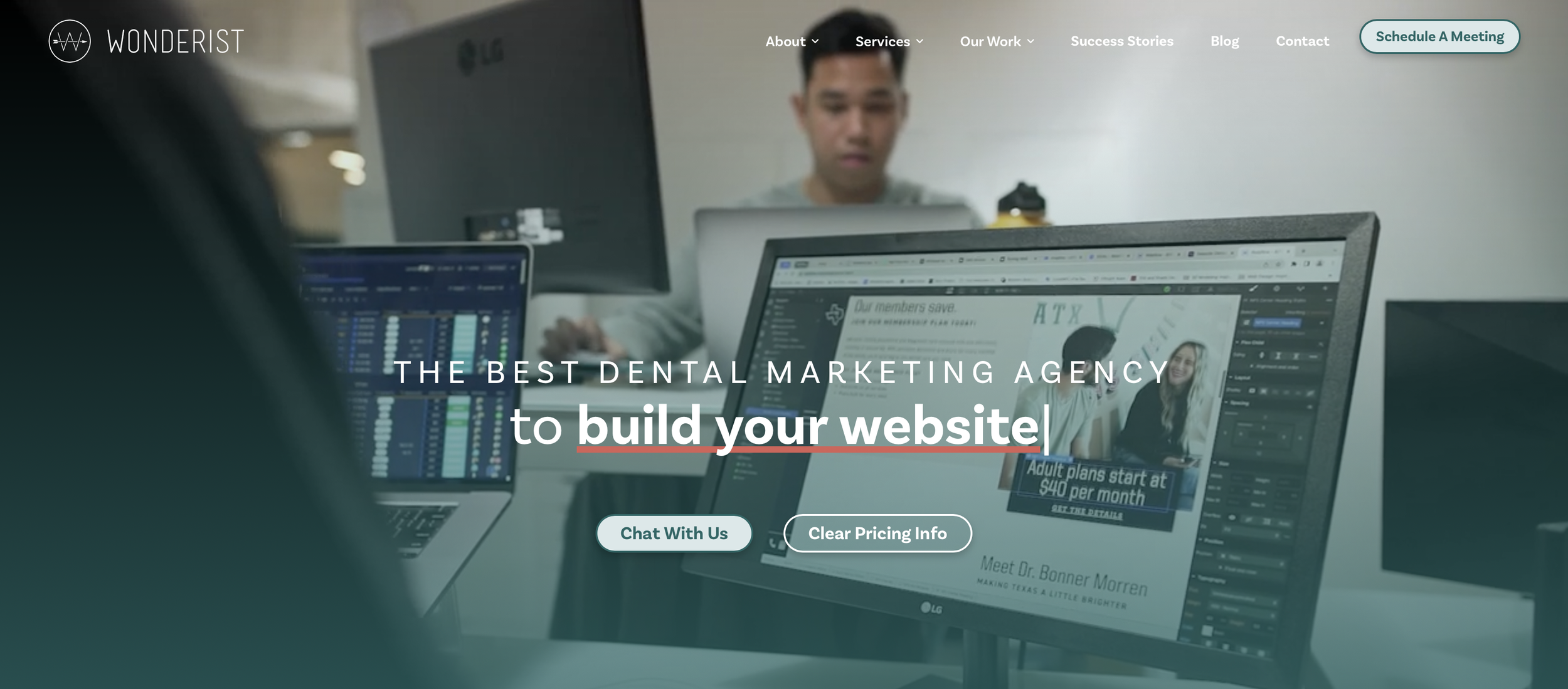
Its homepage organizes client evidence by practice type: a startup (Lakeside Dental, results over 12 months), an established practice (Confident Smiles & Implants, over 7 months) and an acquisition (City Point Dental, over 6 months). It also describes a paid ads campaign that helped a dentist close a $42,000 implant case. These are agency-reported results, and the summaries don't show spend or full comparison periods.
Wonderist doesn't publish a rate card, so pricing is quoted per scope.
Before signing: Ask for the case study closest to your situation (startup, acquisition, multi-location) and a proposal that separates management fees, creative production and media spend.
2. NearLead
Worth considering for: Practices looking for affordable, full-service digital marketing at one flat fee.
NearLead offers website development, SEO and local SEO, AI search, search advertising and content marketing, with priorities shaped around the treatments and locations a practice wants to grow.
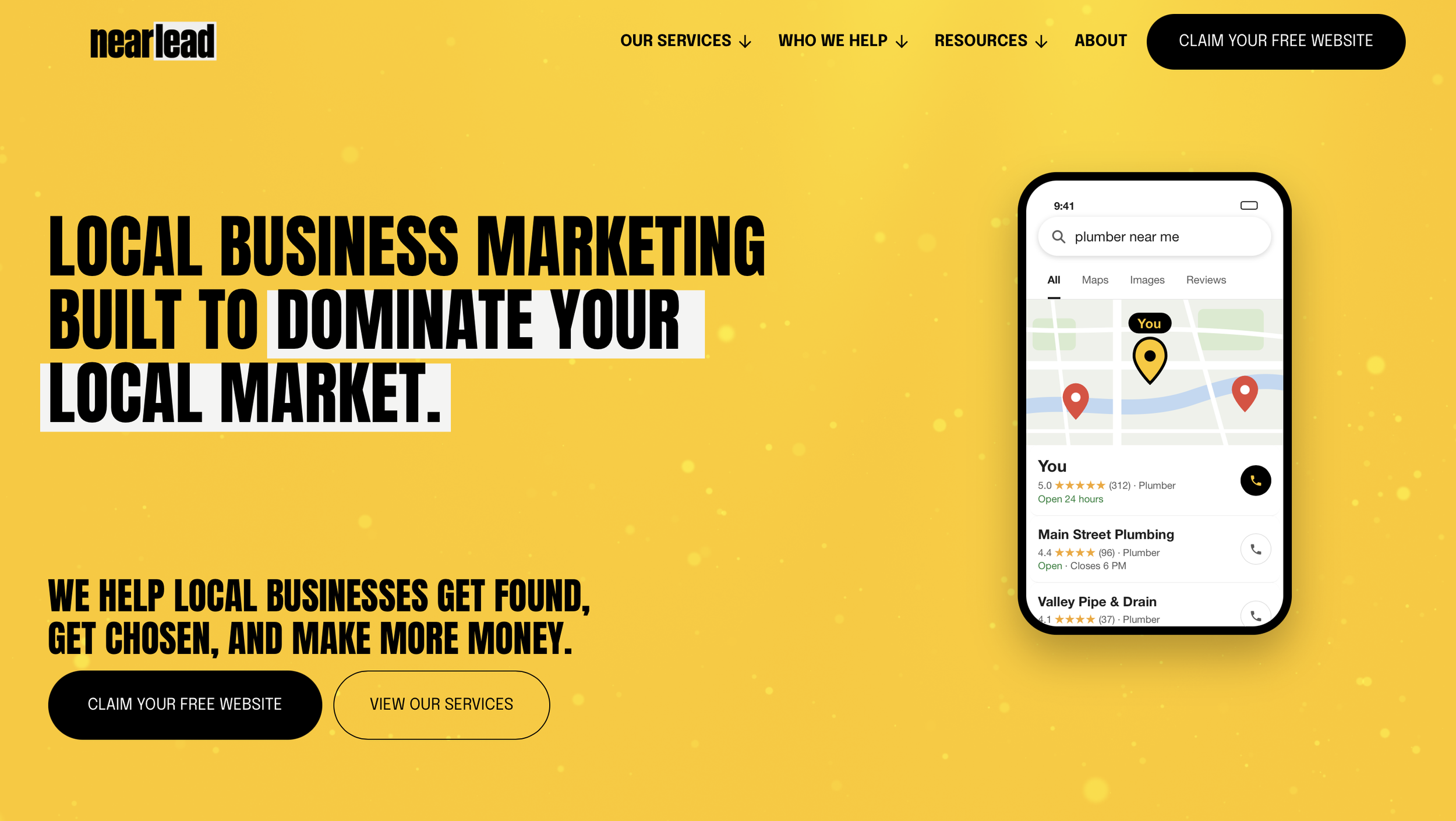
NearLead's most detailed published result comes from a home-services client rather than a dental practice. Over a 20-month engagement with an anonymous plumbing company in Austin, Texas, it reports 64% growth in relevant traffic, 147% more leads, a conversion rate rising from 6% to over 19%, and cost per lead falling from $45 to $24. The campaign also achieved consistent top-three rankings for tracked high-intent Google searches and AI prompts. These agency-reported figures compare matching three-month periods year over year to account for seasonality. Because the client isn't a dental practice, treat it as evidence of approach rather than a forecast for a dental office.
NearLead costs $3,500 per month, excluding advertising spend, with no initiation fee. A free website is included with a 12-month initial commitment, followed by month-to-month service. CRM and conversion technology are separate.
Before signing: Confirm the service scope, website ownership provisions and how reporting will connect enquiries with booked new-patient exams.
3. Progressive Dental Marketing
Worth considering for: Practices focused on implant and full-arch cases that also want help converting consultations.
Progressive Dental, based in Clearwater, Florida, concentrates on high-value treatment rather than general patient volume. Alongside websites, SEO, PPC, social advertising and video, it runs The Closing Institute (TCI), a sales training program for doctors and treatment coordinators.
Its featured client, Sage Dental, began working with Progressive Dental in December 2021. The agency reports the practice grew from 5 to 7 full-arch cases per month to more than 40 within 11 months, and describes a return above 10 times the investment. The figures are agency-reported and don't separate the effect of marketing from training.
Pricing requires a proposal.
Before signing: Ask how marketing and TCI training are priced and committed separately, and whether your practice has the clinical capacity for the case volume the plan targets.
4. Golden Proportions Marketing
Worth considering for: Practices that suspect calls are being lost at the front desk, not just in the ads.
Golden Proportions is a full-service dental marketing agency founded by Xaña Winans, built around what it calls the Smart ROI Method: branding, lead generation, patient communication and coaching. It covers strategy, websites, SEO, Google Ads and social media.
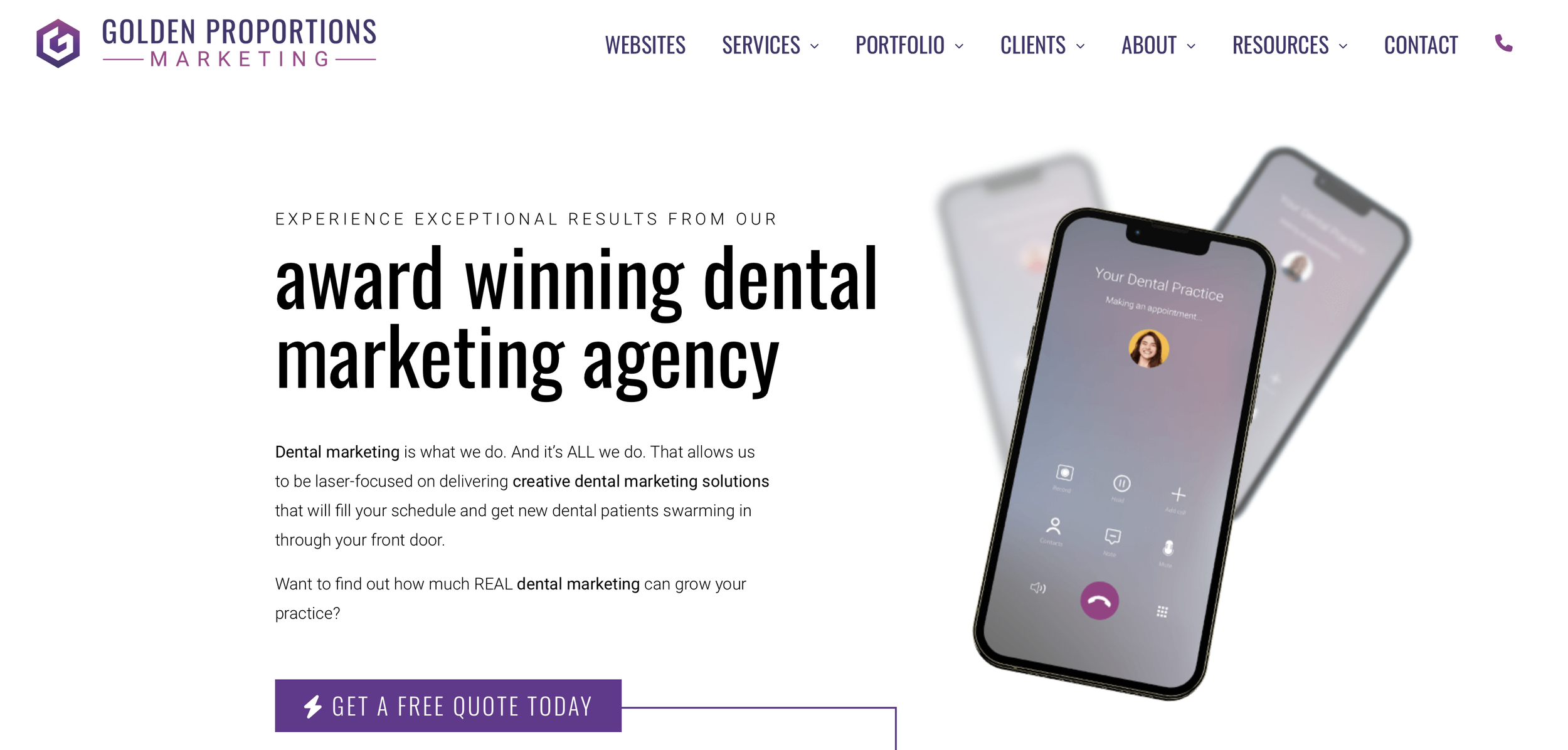
Its distinguishing feature is software. Smart Market Dental, a call tracking dashboard it developed in 2017, now uses AI to screen incoming new-patient calls, and SmartLeads is a subscription tool for following up leads by email, text and chat. That matters if your marketing generates enquiries that never become appointments.
We didn't find a dated, quantified case study on the pages reviewed. Its UpCity directory profile lists a minimum project of $2,500 or more; monthly pricing requires a proposal.
Before signing: Ask which software subscriptions are included, what they cost on their own, and for a client example with before-and-after new-patient numbers.
5. Firegang Dental Marketing
Worth considering for: Practices in crowded markets that need a clearer reason for patients to choose them.
Firegang, based in Spokane, Washington, combines websites, SEO, Google and Facebook advertising and reputation management with a strong emphasis on differentiation: defining what makes a practice different, then building it into every channel.
Its published case studies include more detail than most. Dr. Hill of Family Dental of Spokane Valley reportedly went from about 30 to 65 to 75 new patients a month, with website sessions rising from roughly 500 to 1,200 a month. For Anderson Family Dentist, Firegang reports calls rising from 30 a month to more than 200 by month six, and monthly revenue growth of $57,000. Both are agency-reported.
The Hill case study also notes his previous agency charged $4,800 a month with only $1,000 going to ads, which is a useful reminder to ask how any fee is split. Firegang's own pricing requires a proposal.
Before signing: Ask for the full monthly breakdown between management, creative and media, and how differentiation work is scoped.
6. Scorpion
Worth considering for: Practices wanting marketing services and practice-growth technology from one provider.
Scorpion serves many industries, including dental and healthcare. It combines websites, SEO, digital advertising, content, social media and reputation monitoring with its own analytics and attribution platform and CRM integrations.
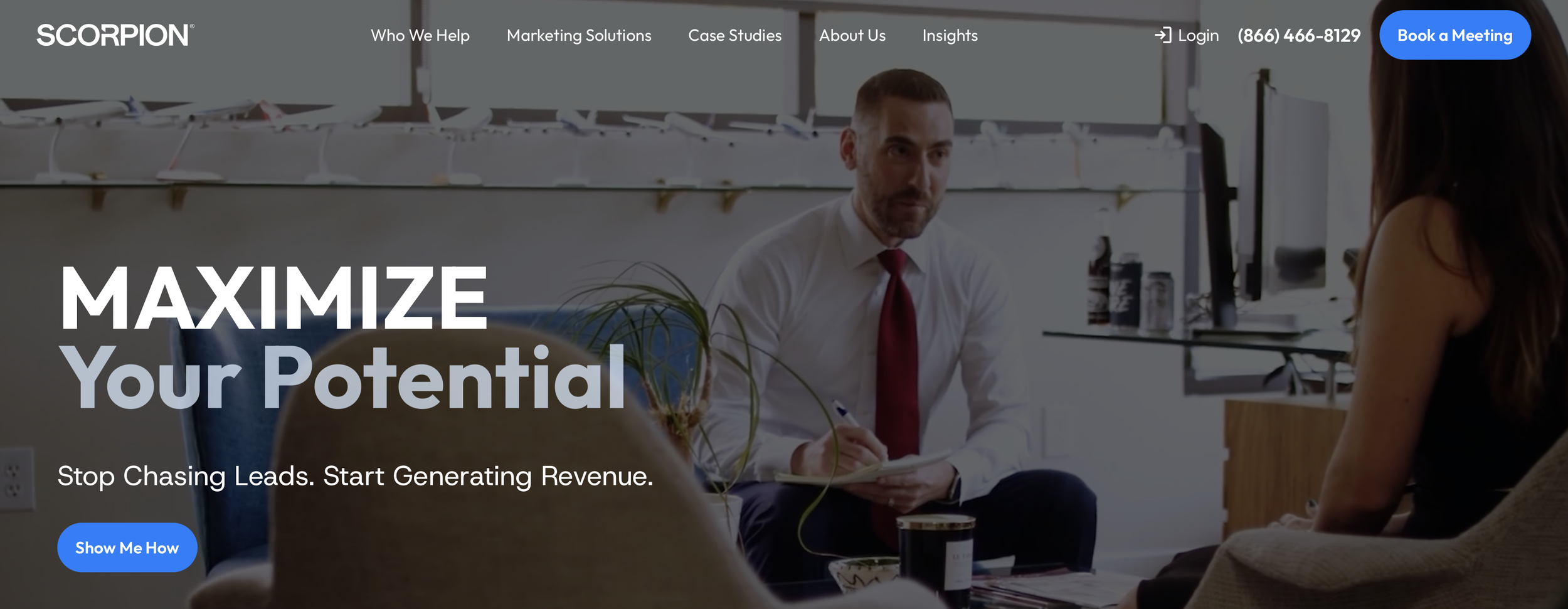
Dental clients featured in its materials include Eastman Dental Care, Adventure Dental and Biscayne Dental & Facial Aesthetics. A profile of one long-time dentist client describes practice growth without an increase in marketing budget, but doesn't provide figures.
Pricing requires a proposal. Scorpion's healthcare page says it typically requires a 12-month contract for marketing technology and certain services such as SEO, while advertising is typically month-to-month. It also says customers own their website once the contract term is complete, and that key accounts such as Google Analytics and social media are transferred if they leave.
Before signing: Confirm what "owning your website" means in practice if you move to another platform, and include any migration cost in your comparison.
7. Pain-Free Dental Marketing
Worth considering for: Practices that want month-to-month terms and protection from an agency serving nearby competitors.
Pain-Free Dental Marketing, based in Grapevine, Texas, works only with dentists, from general and pediatric practices to orthodontists and implant specialists. Its services include websites, paid ads, SEO and social media.

It describes three firm policies: it only works with dentists, it only offers month-to-month agreements, and it only works with one client per area. It also says it focuses on production and D0150s, the procedure code for a comprehensive new-patient exam, which is a more useful measure than raw leads.
Its UpCity profile lists a minimum retainer of $2,000 or more per month and a minimum project of $5,000 or more. The client evidence reviewed consisted of testimonials rather than measured results.
Before signing: Ask how "one client per area" is defined (city, ZIP code or radius) and what happens if you open a second location.
8. ProSites
Worth considering for: A lower-cost website and marketing starting point.
ProSites is a long-established dental website and marketing provider. It says it is trusted by more than 7,500 doctors and endorsed by 15 state dental associations. Services include website design, SEO, reputation and review management, patient communication software and paid advertising.
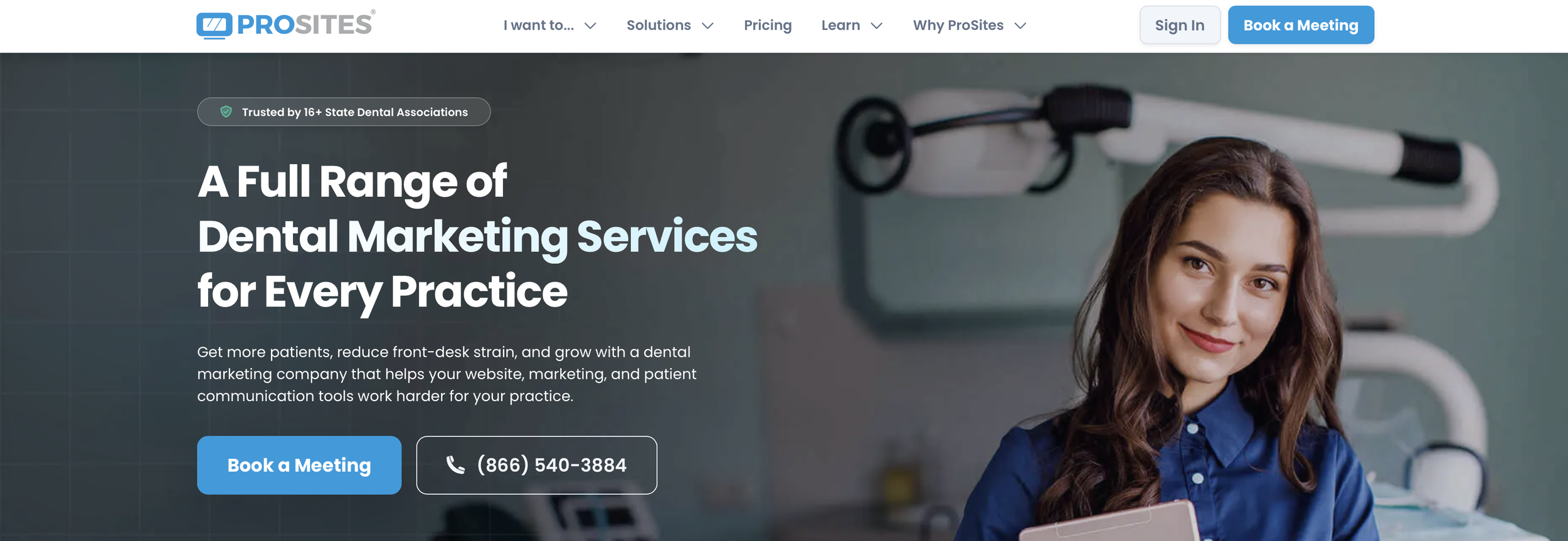
Its published vendor description lists packages starting at $600 per month for website, SEO and review solicitation, and custom websites starting at $900 per month. Some state dental associations advertise member discounts on the initial website setup fee, so expect a setup charge unless one is waived.
The practical question is how the package compares with your goals. A low monthly fee can be a sensible start, but it shouldn't be assumed to include the same work as a larger engagement.
Before signing: Ask what the setup fee is, how often content and service pages are updated, and what paid advertising management would add.
9. :Delmain
Worth considering for: Practices and dental groups focused on measured new-patient acquisition.
This dental marketing agency covers websites, SEO, content and paid advertising, including Meta ads. Its case study page lists several named practices with specific outcomes.
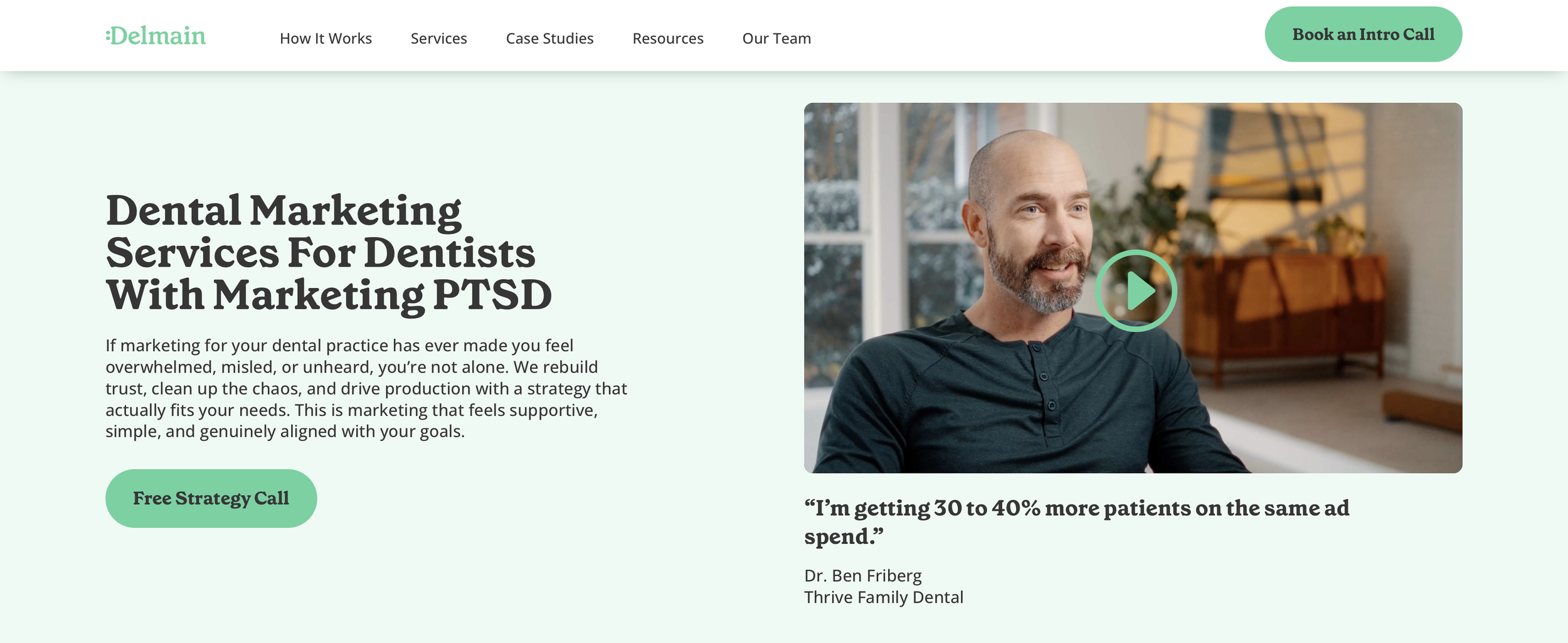
Examples include Timberhill Dental, which it reports grew from 12 new patients a month to more than 80; Thrive Family Dental, where Dr. Ben Friberg reports 30 to 40% more patients a month on the same ad spend; and Spodak Dental Group at $28 per new patient from Google Ads. These are agency-reported results, and most summaries don't give dates or comparison periods.
Pricing and contract terms were not published on the pages reviewed.
Before signing: Ask for the full case study behind any figure you find compelling, including the dates, starting point and monthly spend.
10. Thrive Internet Marketing Agency
Worth considering for: A broad mix of marketing services through one generalist provider.
Thrive is a full-service agency working across many industries, including dental. It offers SEO, PPC, web design, content, reputation management and social media.
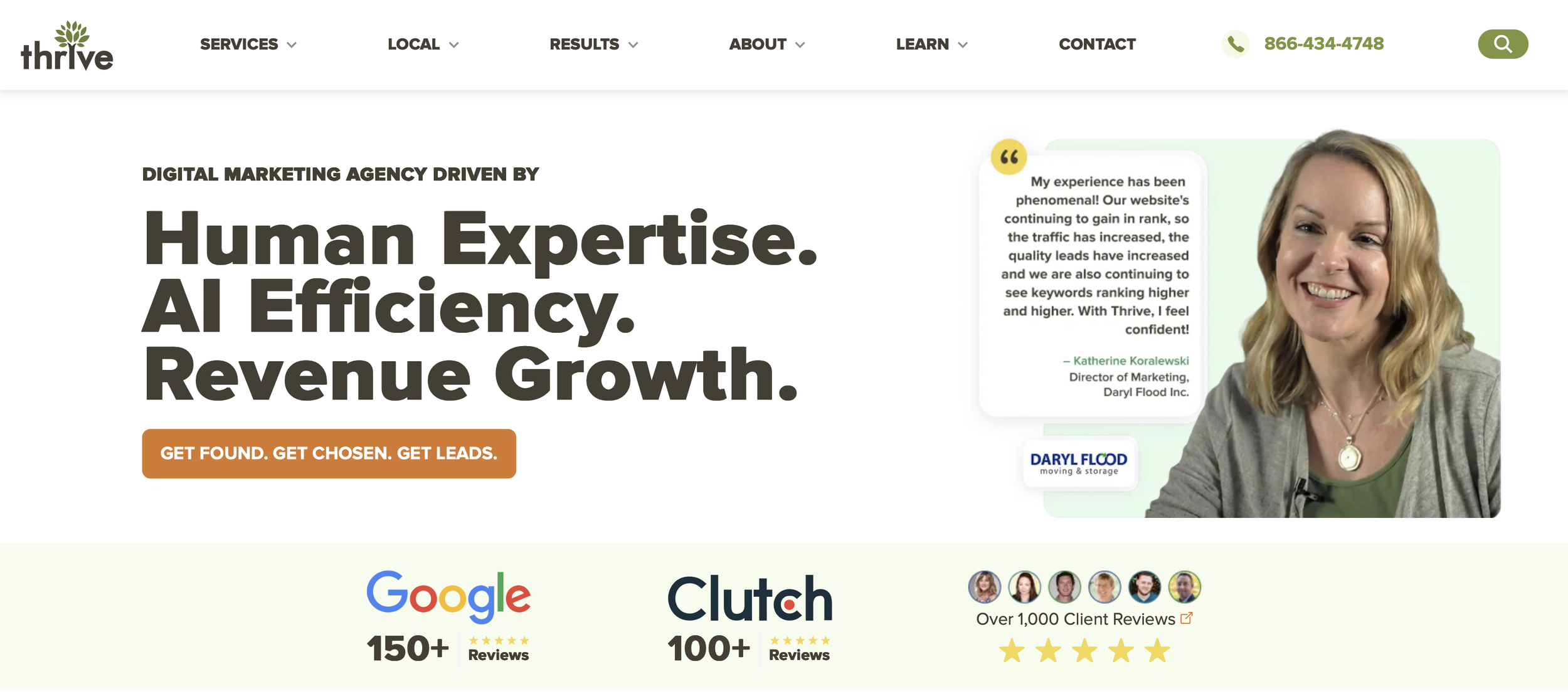
Its most detailed dental-sector example is a multi-location orthodontic group. Over 18 months, Thrive reports a 119% increase in monthly traffic, a 122% rise in monthly leads, and large increases in completed calls and contact forms. Because the client is orthodontic, treat it as related rather than direct evidence for a general practice.
Third-party reviews describe Thrive as working on month-to-month terms. Confirm notice requirements and whether website projects carry separate obligations.
Before signing: Ask who will lead your account, which general dental campaigns that team has run recently, and how reporting separates enquiries from booked appointments.
Which Dental Marketing Agency Fits Your Practice?
Start with the problem you need the engagement to solve. Adding more services may not address the reason growth has stalled.
| Your situation | What to prioritize | What to request |
|---|---|---|
| You're opening a new practice | Visibility before opening day and a working website | A launch timeline, pre-opening plan and first-90-day budget |
| You've acquired an existing practice | Keeping current patients while building trust under new ownership | A plan for the name, reviews and Google listing during the transition |
| Your hygiene schedule has gaps | New-patient acquisition for general and family dentistry | A channel plan, budget and the new-patient exam targets it's built around |
| You want more implant, full-arch or clear aligner cases | Treatment-specific pages, ads and consultation follow-up | Separate reporting for those consultations and cases accepted |
| Calls come in but too few book | Phone handling, response times and follow-up | Call tracking with recordings and a booking-rate baseline |
| You're moving away from PPO plans | Attracting fee-for-service patients | Targeting and messaging that fit patients who'll pay out of network |
| You run several locations or a group | Consistent brand with location-level reporting | Reporting by location and examples from comparable groups |
The specialty distinction matters too. A pediatric or orthodontic case study doesn't establish that an agency can fill a general practice's hygiene schedule, and a general-dentistry result doesn't prove it can sell full-arch cases.
How Much Does a Dental Marketing Agency Cost?
The published examples in this guide cover very different scopes, from a $600-a-month website package to multi-channel programs with sales training. They shouldn't be averaged into a supposed industry rate.
Instead, ask every shortlisted agency to complete the same cost breakdown.
| Cost category | What to clarify |
|---|---|
| Agency fees | Services, treatments, locations and channels included |
| Advertising budget | Amount paid to Google, Meta and others, and who controls the accounts |
| Setup and website work | Upfront charges, installments and any remaining balance if you leave |
| Software | Call tracking, lead follow-up, online scheduling, reviews and reporting subscriptions |
| Additional work | Photography, video, extra pages, new treatments and additional locations |
| Exit costs | Notice period, buyouts, website migration and account transfers |
Consider an illustrative budget, not an industry average or agency quote:
Agency management: $3,000 per month
Advertising spend: $3,500 per month
Software: $400 per month
Total recurring investment: $6,900 per month
A separate $2,500 setup charge would make the first month $9,400.
Comparing only the management fee would miss most of the recurring spend. Request both the first-month total and the full first-year commitment.
Measure the Patients Your Marketing Produces
Ask an agency to explain how its reporting follows an enquiry all the way to treatment.
Each stage answers a different question:
Enquiries: How many calls, forms and online booking requests arrived?
Qualified opportunities: How many were new patients asking about treatments you offer, within reach of your office?
Appointments: How many booked a new-patient exam or consultation?
Patients seen: How many showed up and completed the visit?
Treatment and production: How much treatment was accepted, and was the acquisition cost sustainable?
This hypothetical example shows why the distinction matters:
| Measure | Campaign A | Campaign B |
|---|---|---|
| Total acquisition spend | $5,000 | $5,000 |
| Enquiries | 100 | 70 |
| Cost per enquiry | $50 | $71.43 |
| New patients seen | 25 | 35 |
| Cost per new patient | $200 | $142.86 |
Campaign A looks cheaper when measured by enquiries. Campaign B produces more new patients for the same investment.
Neither result alone establishes profitability. Treatment accepted, insurance mix, chair time and lab costs still matter, and an implant consultation is worth far more than a single cleaning.
Reporting should also separate existing patients, duplicate calls, spam and people outside your area. When several channels contribute to a patient's decision, agree how credit is assigned so one new patient doesn't appear in three reports.
One more dental-specific point: call recordings, contact forms and some tracking tools can capture patient health information. Ask how the agency configures them, and whether it will sign a business associate agreement where it handles patient information.
How to Choose a Dental Marketing Agency: Questions to Ask Before Signing
What would you prioritize during the first 90 days?
Look for a sequence tied to your current website, market, treatment mix and chair capacity. Ask what the agency needs from your team to get started.
Can you show a relevant case study with dates and definitions?
A useful example identifies the starting point, the work performed, budget context, the measurement period and the outcome. Ask whether the result came from a general practice, a specialty practice or a group.
What do I own, and what can I take with me?
Cover the domain, website, content, photos and video, Google Business Profile, ad accounts, analytics and tracking numbers. Owning your content doesn't always mean a working website can move to another platform unchanged.
Will you work with competing practices near me?
If exclusivity is offered, define its boundaries, duration and exceptions. If it isn't, ask how potential conflicts are handled.
How will you connect enquiries with new-patient exams?
Request a sample report and find out what your team must supply. Reporting on patients seen and treatment accepted depends partly on accurate records in your practice management software.
How do you handle patient information?
Ask which tools touch patient data, whether calls are recorded, how forms are secured, and whether the agency will sign a business associate agreement where needed.
Who performs the work?
Establish the account lead, delivery team, meeting frequency and turnaround times. Ask how priorities change if results fall short.
What happens if I cancel?
Clarify notice requirements, outstanding balances, export formats, migration support and the date your access ends.
How Much Weight Should You Give AI Search?
AI search belongs in the discussion. Patients increasingly ask tools like ChatGPT, Gemini and Google's AI Overviews to recommend a dentist or explain a treatment before they call. An agency's proposal should explain the work involved and how its value will be assessed.
Google's own guidance says the best practices for SEO remain relevant for its AI features, and that there's no special schema markup you need to add to appear in them. That guidance covers Google, not every AI platform.
Ask prospective agencies:
Which patient questions, treatments and locations will they monitor?
How often will they repeat those checks?
What changes will they make to your website or content?
How will they tell a brand mention apart from a visit or a booked appointment?
How does this work fit with the rest of your dental SEO?
A screenshot of one AI recommendation doesn't establish consistent visibility or business impact.
Frequently Asked Questions
How much does dental marketing cost per month?
Costs depend on the dental marketing services included, your location and your growth goals. Compare the total marketing spend across agency fees, advertising, software, website work and setup charges. Ask how your marketing dollars will be allocated and which services are essential at your current stage. A lower management fee may offer limited value if important work costs extra or the budget cannot support meaningful patient acquisition.
What is dental SEO?
Dental SEO helps your practice appear when nearby patients search for a dentist or treatment. It typically includes your Google Business Profile, treatment and location pages, website structure, online reviews and local listings. Effective search optimization connects your practice with relevant online search demand and makes it easy for prospective patients to understand your services and request an appointment.
Does dental SEO include AI search optimization?
Some agencies include AI search optimization within SEO; others sell it separately as AI SEO. Ask what work is included, such as improving treatment information, clarifying practice details and making content accessible to search systems. AI tools can assist with research and analysis, but their use alone does not demonstrate results. Evaluate whether the work strengthens your digital presence and attracts relevant patient inquiries.
How do I choose a dental SEO company?
Look for local SEO expertise, dated case studies and a clear explanation of the monthly work. Claims about proven strategies should come with evidence from comparable practices and markets. Ask how the agency connects visibility to appointment bookings, who manages your account and what happens if you cancel. Its marketing expertise should be reflected in clear recommendations, realistic expectations and reporting you can understand.
Is a dental-only agency better than a general marketing agency?
A dental-only agency may bring a stronger understanding of the dental industry, treatment terminology and patient decision-making. A general agency with relevant healthcare marketing experience can also be suitable. Dental professionals should evaluate the assigned team and its evidence. General dentists and oral surgeons have different referral patterns and acquisition needs, so request examples that resemble your practice and treatment goals.
Which marketing channels should a dental practice prioritize?
Prioritize channels around patient demand, treatment goals and available capacity. Paid search can reach people actively seeking care, while social media marketing can build familiarity and support a dentist’s personal brand. Email marketing can support appropriate patient communication and reactivation, and print marketing may help with local awareness. Each channel should serve a defined purpose rather than simply increase the number of services you purchase.
Are advertising costs included in agency fees?
Do not assume they are. Management fees, online advertising and software are often separate. Request an itemized proposal showing the budget for dental PPC, social media ads and other channels, alongside management charges. Confirm who approves budget changes and who owns the advertising accounts. Ask whether a required marketing platform carries additional fees and whether you can export your data when the agreement ends.
Can an agency help attract more implant and cosmetic dentistry patients?
Yes, through informative treatment pages, focused marketing campaigns and a clear consultation process. Dental implants and cosmetic dentistry often involve longer decisions, making education and follow-up important. If an agency promises high value patients or full arch growth, ask how it measures consultation attendance, clinical suitability and treatment acceptance. Campaigns should explain treatment options accurately and support informed patient decisions.
Can an agency help turn more inquiries into appointments?
Yes. Conversion rate optimization can improve treatment pages, forms and booking steps, while call reviews can identify unanswered questions or missed opportunities. Lead automation may help acknowledge inquiries and prompt timely follow-up. Your team still needs clear responsibilities for scheduling, insurance verification and patient questions. Agree on how the agency and practice will address barriers between the first inquiry and an attended appointment.
How long should I give an agency before judging results?
Evaluate delivery and measurement from the beginning, using agreed milestones for setup, campaign launches and reporting. Assess advertising and organic visibility separately, allowing for competition, budget and treatment decision times. Predictable growth requires reliable data and sufficient appointment capacity. Review whether the agency is completing its work, learning from results and connecting improvements to sustainable business growth.
Can I keep my website if I change agencies?
That depends on the agreement and platform. Confirm whether you receive a working, transferable website, an export of content and assets, or ownership after a payment or minimum term. Establish control of your domain, analytics and advertising accounts before signing. If the proposal includes unique marketing features, ask whether they depend on proprietary software and what functionality remains after cancellation.
Should I choose the agency with the lowest cost per lead?
Only after understanding what counts as a lead and how many become patients. Reliable lead tracking should distinguish new inquiries from duplicates, existing patients and irrelevant contacts. Ask whether PMS connected ROI tracking can link marketing sources to appointments, accepted treatment and collected revenue, and where attribution remains uncertain. Compare acquisition costs with patient outcomes rather than choosing an agency solely because it reports cheaper inquiries.
Choose a Partner Around the Patients You Want to Attract
Before requesting proposals, write down the treatments you want to grow, the area you can realistically serve, your chair and provider capacity, and your full monthly budget.
Give the same brief to two or three agencies. Compare their proposed work, costs, evidence and commitments.
A strong proposal should explain why its priorities fit your practice and how both sides will know whether the engagement is working.
Considering NearLead? Bring those details to an initial conversation about your website, search visibility and advertising. Agency pricing is $3,500 per month, excluding advertising spend, with the agreed scope and responsibilities set out in your proposal.
Editorial disclosure: The order reflects editorial experience, research and choices, rather than an independently scored performance ranking. Other agency information comes from the public sources listed below and was reviewed in October 2026. Reported client results have not been independently audited.
“You bring the business, we’ll bring the marketing. Together, we’d be unstoppable.”
